
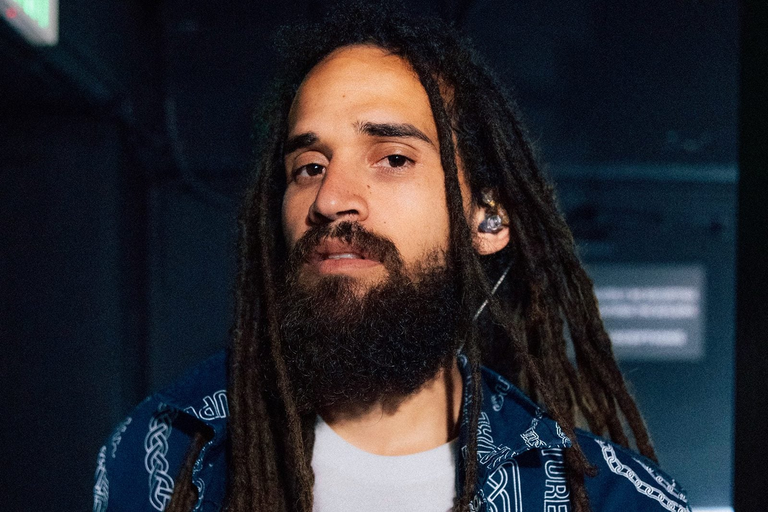
Keznamdi built a Grammy-nominated reggae career without a major label or a big distribution deal, and he still will not tell the full story of how that nomination arrived. In a new interview he traces the path through Kingston hills, Tanzania, and Ethiopia, then stops short: there is a bigger Grammy story, he says, and he is not ready to share it.
A Kingston bed that used to shake
He was born and raised in Skyline Levels, a Kingston hillside community he describes as a place where worlds collide. Rastafari culture and live roots music were not a weekend interest. The Dub Club, which played strictly roots and dub on Sundays, sat close enough that his bed used to shake when the sound system started. Kabaka Pyramid, Jesse Royal, Chronixx, Kelissa, and Micah Shemaiah moved through that same scene, and he treats it as a real training ground.
That early room matters because his later independence did not come from nowhere. He grew up hearing music as community infrastructure, not as a product pitched by a company. When he talks about a guerrilla approach to promotion, it sounds like an extension of that hillside education.
"We did it on our own terms. We never sell out, we never bow to no system. We took the long way around."
Africa complicated the story he inherited
Around thirteen or fourteen, his mother, who worked for a nonprofit, moved the family to Africa. They lived in Tanzania for three years, then Ethiopia, where he finished high school. He says those formative years on the continent changed him in a way adult travel cannot copy. "The little world where you exist is so small in the global space," he said. "The perspective that you carry in is not the only perspective."
Ethiopia was not a simple homecoming for a youth raised in Rastafari reverence for Emperor Haile Selassie. Living there exposed sharply different views. His high school thesis examined that contrast, including the Derg regime's propaganda, the displacement of Eritrean people, and Selassie's appearance before the League of Nations. He quotes the emperor's "Today for me and tomorrow for you," and he is careful to hold more than one truth: love for Eritrean people, and acknowledgement of generational hurt.
Bloodline, Blood on Fire, and a nomination without compromise
Music was already in the house. His parents toured Africa while he opened for them. His first recording came at age six on a children's album his mother was making. A guitar from his father at sixteen taught him melody and, eventually, how to sing. He points to the 2020 album "Bloodline" as his first real body of work. It was building momentum until the pandemic shut the road down.
"Blood on Fire" changed the trajectory and led to a Grammy nomination, alongside names including Vybz Kartel and acts tied to companies such as Easy Star and Ineffable. "Just getting the nomination was good enough," he said. "Me win the Grammy with the nomination." He remembers his mother hugging him and crying when the announcement hit television. The pride, he says, came from earning it without giving up his terms.
The story he is protecting, and the deal he did not take
On how the nomination actually came about, he is deliberate. There is more, but he will not tell it yet. "I have to wait, bro, just to protect myself," he said. "But there's a bigger story to that." He promised to return and tell it in full. That pause is part of the interview's weight. Independence is not only a branding line when an artist believes speaking too soon could cost him.
He also admits label offers came early and that, looking back, he probably should have taken at least one. At eighteen or nineteen he would not give up his masters. The stubbornness created mistakes, and he now calls that trial and error the right education. Watch the conversation above, then wait for the Grammy chapter he says is still locked. Keznamdi is not short on story. He is choosing when the rest of it gets told.

